Skip to main content
Advancing Your Data Governance Strategy with Microsoft Fabric
September 15, 2024Data governance is no longer just about securing information or meeting compliance standards. It's about ensuring that data remains a trusted, transparent, and actionable resource.
Exploring data governance through Fabric
Data governance involves organising and securing data so it can be trusted, compliant, and readily accessible. With Microsoft Fabric, this means bringing together previously fragmented tools and processes into one cohesive framework. At its heart, data governance ensures the right data is in the right hands at the right time, while maintaining integrity and security.
Overcoming fragmentation
Fabric helps organisations handle fragmentation across scattered systems by consolidating data sources, catalogs, and governance policies into a unified platform. This eliminates the silos that typically hinder data discovery and compliance.
Meeting compliance requirements
With evolving regulatory requirements, organisations need governance frameworks that adapt quickly. Fabric's built-in compliance tools help teams stay ahead of regulatory changes while maintaining consistent data handling practices.
Establishing data trust
Building confidence in data accuracy and integrity is essential. Fabric provides the tooling needed to verify data origins, track transformations, and ensure that stakeholders can rely on the information they access.
Key features that support governance
Fabric integrates multiple capabilities for data governance. Data lineage tools help users trace the origin, movement, and transformation of data — vital for audits, troubleshooting, and compliance.
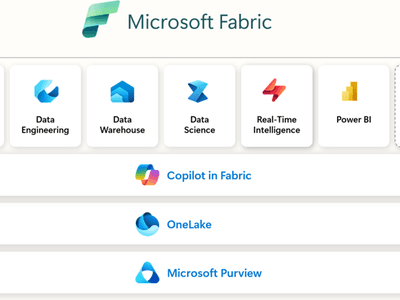
Integration with Microsoft Purview enables tagging, tracking, and managing data through sensitivity labels and compliance monitoring. AI-driven discovery makes it easier to locate relevant data in large datasets where manual searches are impractical.
Trust and Generative AI in governance
Trust is central to any governance strategy. Fabric incorporates a range of mechanisms to ensure data remains reliable and accountable throughout its lifecycle.
Provenance and auditability
Provenance tracking verifies data origins and transformations, creating a clear audit trail. Combined with built-in auditability features, organisations can demonstrate compliance and accountability at every stage of the data pipeline.
Integrity and safeguards
Integrity checks safeguard against corruption or mismanagement, ensuring that data quality is maintained as it flows through different systems and processes within the organisation.
AI-enhanced governance workflows
Generative AI introduces new possibilities for automating and enhancing governance workflows within Fabric — from repetitive task automation to smart insights for faster identification of patterns and anomalies. This allows governance teams to focus on strategic decisions rather than manual oversight.
Understanding governance's role
Data governance is not about tools alone — it's about the processes, principles, and practices that keep data aligned with organisational goals. Platforms like Microsoft Fabric show how governance can evolve to meet modern needs.
From traditional to modern frameworks
By incorporating AI, transparency, and scalability into traditional frameworks, organisations can build governance strategies that grow with their data needs rather than becoming obstacles to innovation.
Data as a strategic advantage
This shift allows organisations to use their data as a strategic advantage while maintaining stakeholder confidence. When governance is embedded into the data platform itself, it becomes an enabler rather than a bottleneck.
Find out more about data automation
Redefining data management for organisations with Microsoft Fabric
Microsoft Fabric unifies diverse data management tools into a cohesive SaaS platform. This article explores its architecture and how they empower organisations to optimise data operations.
Cognitive Search: unlocking value from unstructured data
How Tafuta, Arinti's cognitive search platform, helps organisations retrieve value from unstructured data using NLP, speech-to-text, and image processing.

Getting value from large datasets in a short amount of time
We performed a one-week data analysis for NMBS (Belgian railways) on datasets with millions of rows. Here are our tips for investigating large datasets when time is of the essence.
Did you know that of all information within companies, an estimated 80% is unstructured?
Modern governance platforms like Microsoft Fabric help organisations bring order to this chaos — turning unstructured data into a trusted, actionable asset.
Related Cases
From SharePoint archive to knowledge tool
AI-powered enterprise search for Flanders Investment & Trade, turning 15,000 documents into a searchable knowledge base with automatic metadata extraction, image analysis, and semantic search on Azure AI Search, supporting 10,000 client enquiries per year.

Forecasting sales across 14 product categories
Sales forecasting for Unilever Belgium, predicting daily and monthly sales volumes across 14 product categories using category-specific machine learning models, with Power BI dashboards for the commercial team.

AI scheduling tool wins back 17 production days per year
AI scheduling tool wins back 17 production days per year: an algorithm that optimises production line cleaning sequences at Griffith Foods' Herentals facility, reducing wet cleanings by 5%, saving 1,000m³ of water annually, with payback in 10 months and global rollout to all 21 sites.