Skip to main content
YouFlanders - Safe tourism during COVID-19
When Belgium's tourism sector shut down in March 2020, Tourism Flanders surveyed hundreds of industry stakeholders and collected over 300 suggestions. The common need: clear information about what was allowed, where, and how crowded it was. Together with Cronos Public Services, Monkeyshot, and Studio Hyperdrive, we built the YouFlanders app — a mobile application that connected visitors and operators with real-time crowd data, local measures, and tourism recommendations. Arinti handled the data analysis and data architecture. The app launched on 8 June 2020.
A sector looking for answers
In March 2020, Belgium's tourism sector came to a full stop. Tourism Flanders surveyed hundreds of operators and stakeholders to understand what was needed for a safe restart. Over 300 ideas and suggestions came back, and the common thread was clear: operators and visitors alike needed real-time information about crowd levels, local measures, and what was permitted where.
Tourism Flanders turned this into a concrete brief: a mobile app that connects, informs, and inspires — giving both visitors and operators access to the same up-to-date information.

“We had no time to lose, but everything had to be done right from the start. Cronos Public Services provided the solution, and we could quickly partner with their competence centres for design, development, and data architecture.”
Three months from concept to launch
Tourism Flanders partnered with Cronos Public Services, bringing together Monkeyshot (design), Studio Hyperdrive (development), and Arinti (data analysis and data architecture). The deadline was fixed: the app had to go live on 8 June 2020.
What the app did
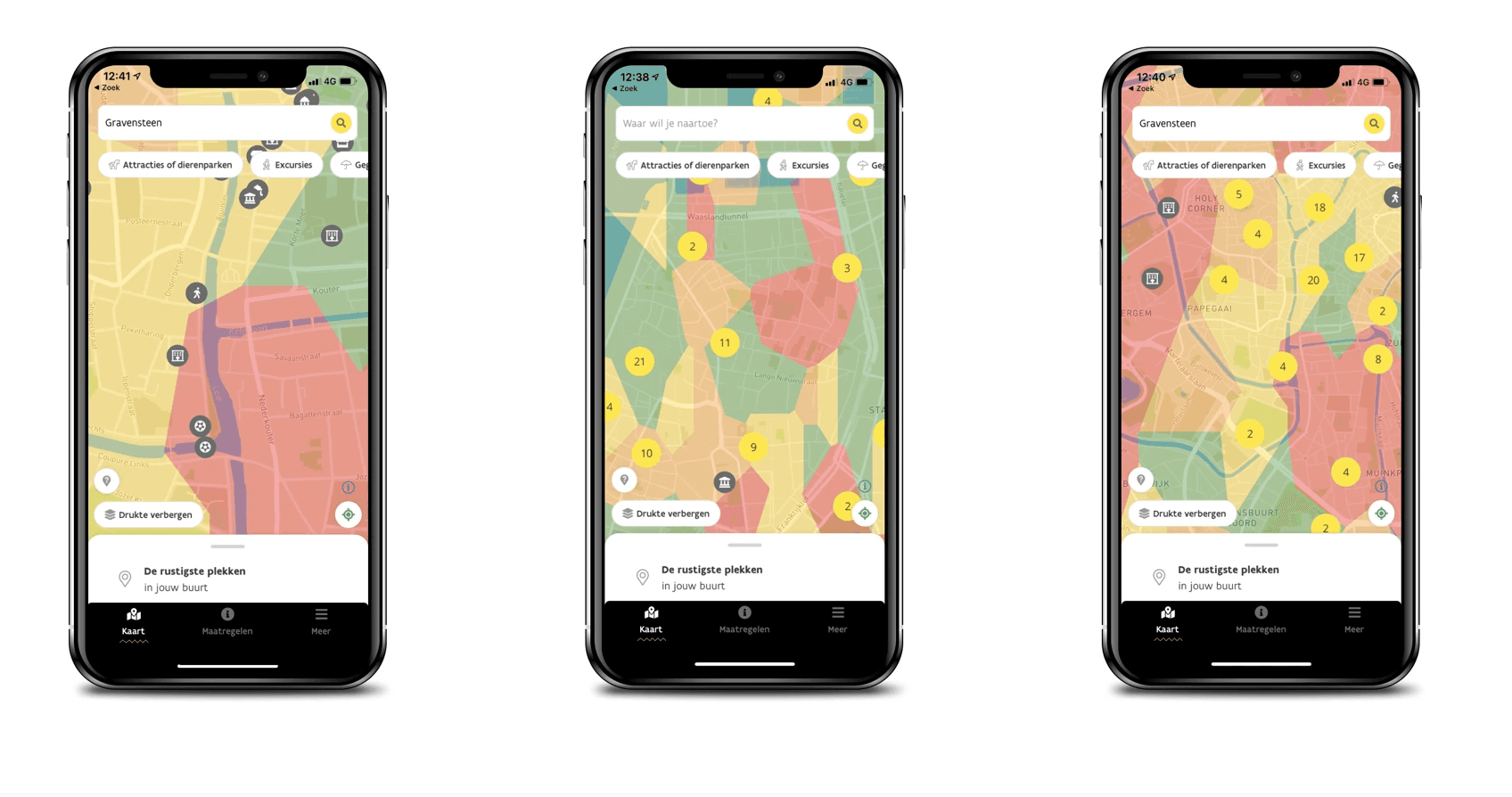
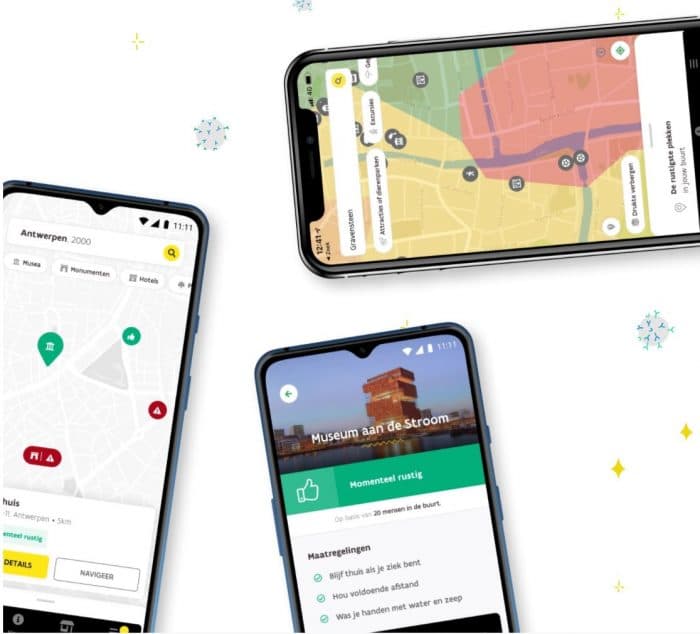
The app showed real-time crowd levels at tourist attractions, local COVID-19 measures per region, and recommendations for nearby destinations. Users could actively report how busy a location was, helping others decide whether a visit was worthwhile. Operators could indicate which measures applied at their venue.
Accessibility and privacy
The app was built for all users, including people with disabilities. Privacy was a core design constraint — user data was only used for its stated purpose.
What came next
After the initial launch, the team continued developing the platform. Automated heatmaps were added, showing crowd density based on mobile tower data. The content scope expanded beyond tourist attractions to include natural areas.
The data collected through the app also created a foundation for future applications — aggregated crowd and mobility data that Tourism Flanders could use for broader planning.