Skip to main content
Social robots for personalised diabetes education in children
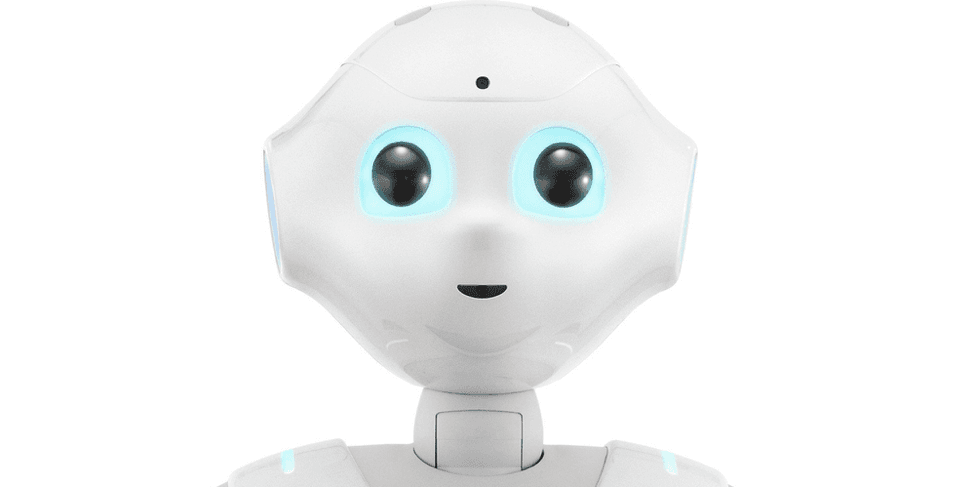
ROBOCURE is an ICON applied research project that investigates how social robots, the Internet of Things, and artificial intelligence can improve medical treatments, focused on diabetes treatment in children. Together with The Learning Hub, we built StoryLine 2 Pepper: a tool that allows non-technical staff to create interactive e-learning content delivered by a Pepper humanoid robot, with Learning Record Store integration to monitor patient education.
What ROBOCURE set out to do
ROBOCURE investigates how social robots can inform and guide patients, using patient data collected via the robot to establish more personalised treatments. The project studies how machine learning and medical expertise can automate data management and analysis for personalised therapies. The research focuses on diabetes treatment in children.
The project is part of the ICON applied research programme and includes partners from both the private and public sector: Arinti, The Learning Hub, QBMT, UZ Brussel, Medtronic Belgium, imec — IDLab — UGent, imec — SMIT — VUB, VUB — GRON, and VUB — R&MM.

“ROBOCURE researches and validates the use of robots, the Internet of Things and artificial intelligence in healthcare to improve medical therapies. The project is based on remotely collected data.”
StoryLine 2 Pepper: e-learning content for robots
We partnered with The Learning Hub to merge e-learning with social robotics. The goal: allow non-technical staff to create interactive learning content that a humanoid robot could deliver, without specialist programming.
Why a robot
Research at Plymouth has shown that children respond well to robots when it comes to influencing behaviour and opinions, making them suited for the role of educator. A humanoid robot combines the benefits of digital content with reactive, social interaction based on the child’s behaviour. The solution also supports browser access when no robot is available.
How it works
We built on StoryLine, a widely used e-learning authoring tool similar to PowerPoint. Learning content created in StoryLine is exported to HTML with integrated LRS (Learning Record Store) support. We added an interface layer that enables interaction with the Pepper robot through just two commands: Listen (for speech recognition) and Say (for robot speech). Browser support uses the Web Speech API and SpeechSynthesis for testing without a physical robot.
Patient interaction
When a learning module starts, Pepper introduces itself and asks the patient to proceed. The tablet hints at expected words to improve recognition. If recognition fails, the robot asks the patient to repeat. Tablet interaction serves as a fallback. Modules are deployed to the robot via a task scheduler built by imec, with LRS monitoring built in.
What we delivered
The project produced a pipeline for creating learning content without technical expertise, delivered by a humanoid robot. StoryLine’s interactive features augment standard e-learning functionality. Educational results are monitored through native StoryLine and LRS integration.
At the time of the project, the integration supported the Pepper robot, with the architecture designed to extend to other robots that have a tablet and JavaScript API.
ROBOCURE received coverage from VRT NWS, VTM Nieuws, HLN, Nieuwsblad, and RTBF.